 Image 1 of 1
High-Strength Niacinamide for Discoloration, Acne-Prone Skin + Barrier Support
If you've tried niacinamide before and thought your skin simply didn't like it, it may have been the formula - not the ingredient.
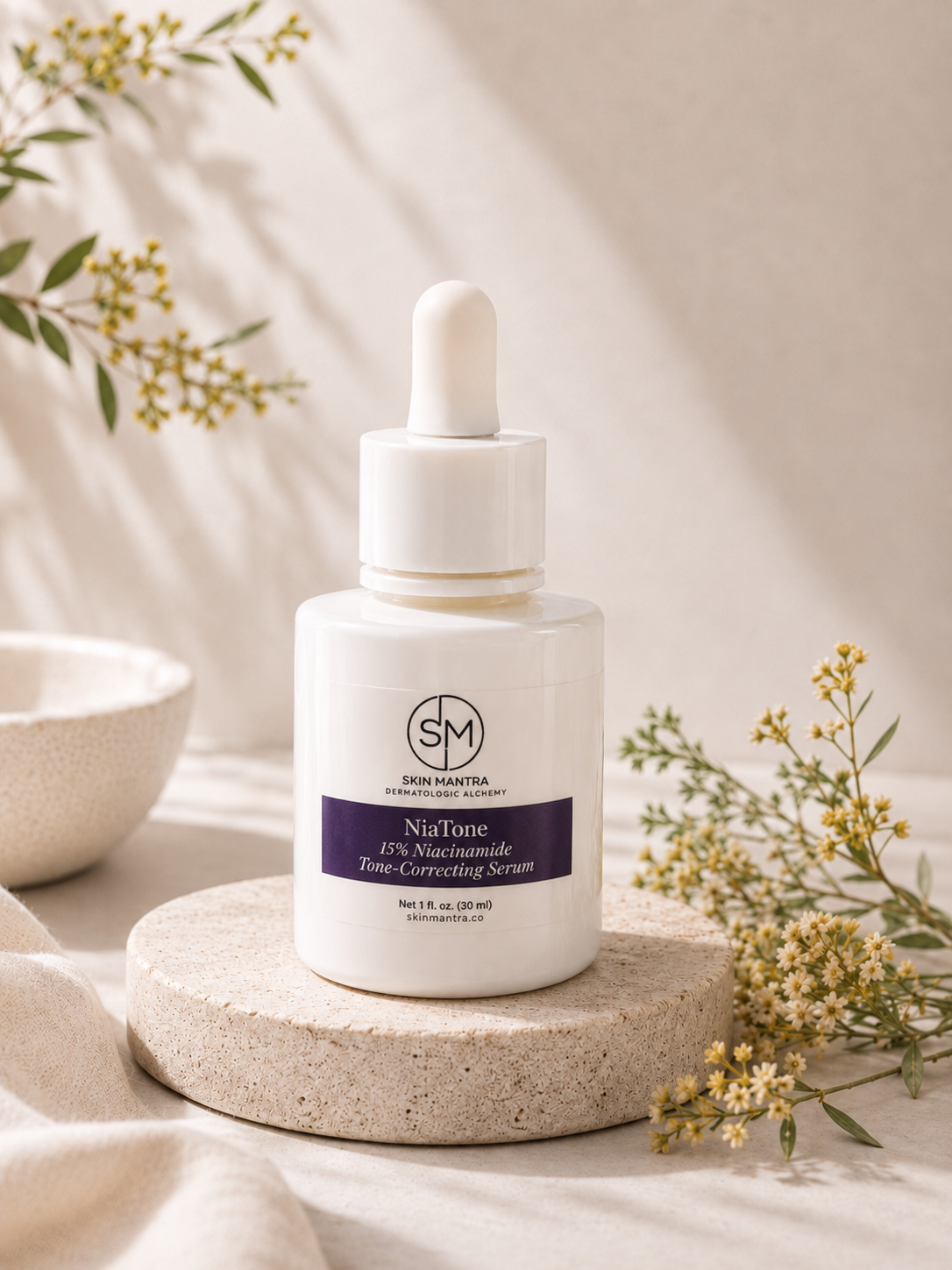
NiaTone™ is a lightweight, fast-absorbing 15% niacinamide (vitamin B3) serum formulated for people looking to improve the appearance of uneven skin tone, post-acne discoloration, visible redness, excess oil and early signs of photoaging - without the heavy or sticky feel of many high-strength niacinamide products.
It provides light hydration and layers beautifully beneath moisturizer and sunscreen. Depending on your skin type, climate and season, it may even provide enough hydration to use in place of a traditional moisturizer.
Niacinamide is one of the skincare ingredients patients ask me about most - and for good reason.
Research supports topical niacinamide for several concerns that commonly occur together: uneven pigmentation, visible signs of photoaging, redness and skin-barrier function. Clinical studies using topical niacinamide have demonstrated improvements in hyperpigmented spots, fine lines, texture, red blotchiness and elasticity.
But a good ingredient doesn't automatically make every product containing it a good formulation.
I've had many acne-prone patients tell me they bought a popular niacinamide serum from Amazon or Sephora hoping to improve their acne marks, only to feel more congested or experience new breakouts. The complete formulation matters.
As someone with acne-prone skin myself, I'm particularly selective about products I'm willing to recommend. NiaTone is one I can stand behind. It's light, absorbs quickly, provides just enough hydration and doesn't leave my skin feeling greasy or heavy.
This is one of the reasons I particularly like niacinamide.
After inflammation - especially an acne lesion - excess pigment can remain behind as post-inflammatory hyperpigmentation (PIH). Sun exposure can make existing discoloration appear darker and more persistent.
Niacinamide has a well-studied role in pigmentation. Rather than functioning primarily as a tyrosinase inhibitor, research suggests it interferes with the transfer of melanosomes - the pigment-containing structures produced by melanocytes - to surrounding keratinocytes. Human studies have demonstrated measurable reductions in visible hyperpigmentation with topical niacinamide.
That's why I particularly like NiaTone for someone dealing with the frustrating combination of breakouts + the dark marks they leave behind.
And because UV exposure contributes to persistent pigmentation, sunscreen remains an essential part of any discoloration routine.
NiaTone™ is a 15% niacinamide serum designed for people looking for lightweight, daily support for multiple common skin concerns. Topical niacinamide for hyperpigmentation and discoloration is particularly popular because it can help improve the appearance of uneven pigmentation without relying on exfoliation.
I especially like niacinamide for acne-prone skin because the same routine can address excess oil and the post-inflammatory hyperpigmentation (PIH), dark spots and acne marks that blemishes often leave behind. Niacinamide is also a useful ingredient for oily skin, visible redness and uneven tone.
Great for:
Hyperpigmentation and discoloration
Post-inflammatory hyperpigmentation (PIH)
Post-acne dark spots and acne marks
Acne-prone skin
Oily and combination skin
Uneven skin tone
Visible redness and blotchiness
Visible pores and excess surface oil
Lightweight barrier support
Early signs of photoaging
I particularly like NiaTone for an area we tend to forget: the backs of our hands.
Years of incidental UV exposure from driving and everyday outdoor activities can contribute to uneven pigmentation and visible photoaging on the hands.
Apply NiaTone™ to the backs of the hands in the morning and follow with broad-spectrum SPF 30+.
Apply a thin layer to clean skin once or twice daily.
Oily or combination skin: Try NiaTone alone for lightweight hydration before sunscreen.
Normal or dry skin: Apply NiaTone first and follow with moisturizer.
For discoloration: Consistency matters. Apply regularly and pair with daily broad-spectrum sunscreen to help prevent UV exposure from perpetuating pigmentation.
Hands: Extend the serum over the backs of your hands before applying sunscreen.
Treat the breakout - and think ahead to the mark it may leave behind.
For acne-prone skin, I like building routines that address both active blemishes and the discoloration that can remain afterward. Niacinamide fits beautifully into that strategy because it can be incorporated into a daily routine without adding another exfoliating acid.
And don't stop at your jawline. Extend it to your neck, upper chest and backs of your hands, then follow exposed areas with a mineral based sunscreen, daily.
High-Strength Niacinamide for Discoloration, Acne-Prone Skin + Barrier Support
If you've tried niacinamide before and thought your skin simply didn't like it, it may have been the formula - not the ingredient.
NiaTone™ is a lightweight, fast-absorbing 15% niacinamide (vitamin B3) serum formulated for people looking to improve the appearance of uneven skin tone, post-acne discoloration, visible redness, excess oil and early signs of photoaging - without the heavy or sticky feel of many high-strength niacinamide products.
It provides light hydration and layers beautifully beneath moisturizer and sunscreen. Depending on your skin type, climate and season, it may even provide enough hydration to use in place of a traditional moisturizer.
Niacinamide is one of the skincare ingredients patients ask me about most - and for good reason.
Research supports topical niacinamide for several concerns that commonly occur together: uneven pigmentation, visible signs of photoaging, redness and skin-barrier function. Clinical studies using topical niacinamide have demonstrated improvements in hyperpigmented spots, fine lines, texture, red blotchiness and elasticity.
But a good ingredient doesn't automatically make every product containing it a good formulation.
I've had many acne-prone patients tell me they bought a popular niacinamide serum from Amazon or Sephora hoping to improve their acne marks, only to feel more congested or experience new breakouts. The complete formulation matters.
As someone with acne-prone skin myself, I'm particularly selective about products I'm willing to recommend. NiaTone is one I can stand behind. It's light, absorbs quickly, provides just enough hydration and doesn't leave my skin feeling greasy or heavy.
This is one of the reasons I particularly like niacinamide.
After inflammation - especially an acne lesion - excess pigment can remain behind as post-inflammatory hyperpigmentation (PIH). Sun exposure can make existing discoloration appear darker and more persistent.
Niacinamide has a well-studied role in pigmentation. Rather than functioning primarily as a tyrosinase inhibitor, research suggests it interferes with the transfer of melanosomes - the pigment-containing structures produced by melanocytes - to surrounding keratinocytes. Human studies have demonstrated measurable reductions in visible hyperpigmentation with topical niacinamide.
That's why I particularly like NiaTone for someone dealing with the frustrating combination of breakouts + the dark marks they leave behind.
And because UV exposure contributes to persistent pigmentation, sunscreen remains an essential part of any discoloration routine.
NiaTone™ is a 15% niacinamide serum designed for people looking for lightweight, daily support for multiple common skin concerns. Topical niacinamide for hyperpigmentation and discoloration is particularly popular because it can help improve the appearance of uneven pigmentation without relying on exfoliation.
I especially like niacinamide for acne-prone skin because the same routine can address excess oil and the post-inflammatory hyperpigmentation (PIH), dark spots and acne marks that blemishes often leave behind. Niacinamide is also a useful ingredient for oily skin, visible redness and uneven tone.
Great for:
Hyperpigmentation and discoloration
Post-inflammatory hyperpigmentation (PIH)
Post-acne dark spots and acne marks
Acne-prone skin
Oily and combination skin
Uneven skin tone
Visible redness and blotchiness
Visible pores and excess surface oil
Lightweight barrier support
Early signs of photoaging
I particularly like NiaTone for an area we tend to forget: the backs of our hands.
Years of incidental UV exposure from driving and everyday outdoor activities can contribute to uneven pigmentation and visible photoaging on the hands.
Apply NiaTone™ to the backs of the hands in the morning and follow with broad-spectrum SPF 30+.
Apply a thin layer to clean skin once or twice daily.
Oily or combination skin: Try NiaTone alone for lightweight hydration before sunscreen.
Normal or dry skin: Apply NiaTone first and follow with moisturizer.
For discoloration: Consistency matters. Apply regularly and pair with daily broad-spectrum sunscreen to help prevent UV exposure from perpetuating pigmentation.
Hands: Extend the serum over the backs of your hands before applying sunscreen.
Treat the breakout - and think ahead to the mark it may leave behind.
For acne-prone skin, I like building routines that address both active blemishes and the discoloration that can remain afterward. Niacinamide fits beautifully into that strategy because it can be incorporated into a daily routine without adding another exfoliating acid.
And don't stop at your jawline. Extend it to your neck, upper chest and backs of your hands, then follow exposed areas with a mineral based sunscreen, daily.