An Elemental Experience of the Nor-Way
When I was in Norway, I kept noticing something that felt deeper than politeness. It was a kind of collective steadiness. People were not loud, intrusive, or performative. In fact, on the city streets they often kept to themselves. And yet there was this quiet, unmistakable attentiveness. People made eye contact. People noticed. People responded. When my boyfriend unknowingly dropped his beanie on a street in Oslo, someone immediately made the effort to make sure it got back to him. Our local fjord tour guide told us that if you accidentally left your phone somewhere, there was a good chance it would be waiting for you in the nearest safe open place. That kind of trust says something profound about a culture.
What struck me was that this trust did not seem accidental. It felt cultivated. Norwegians seem to move through the world with an innate knowing that they are part of something shared. Their interactions reflected that. Many small business employees and locals seemed to pivot fluidly between languages, not to show off, but to connect with purpose. There was a sense that communication was meant to help, to include, to make things work better. That same ethic seemed to appear everywhere else too: in the streets, in the transit systems (where you’ll find special designated seats for pregnant women and the elderly or disabled), in the way waste is handled (continue reading for the details), in the way energy is sourced, and in the way the land itself is treated.
That is the main thing I carried home with me: in Norway, stewardship of people and stewardship of land feel like the same practice within the same container… because IT IS. When a society cares for its land, water, air, and resources, it creates healthier conditions for human nervous systems, healthier communities, healthier children, and healthier relationships. When it reduces noise, pollution, waste, and chaos, it is not only protecting a fjord or a forest. It is also protecting the minds, bodies, and daily lived experiences of the people inside that system. The container shapes the life within it and fuels the sustainable success of the society. To care for one is to care for the other.
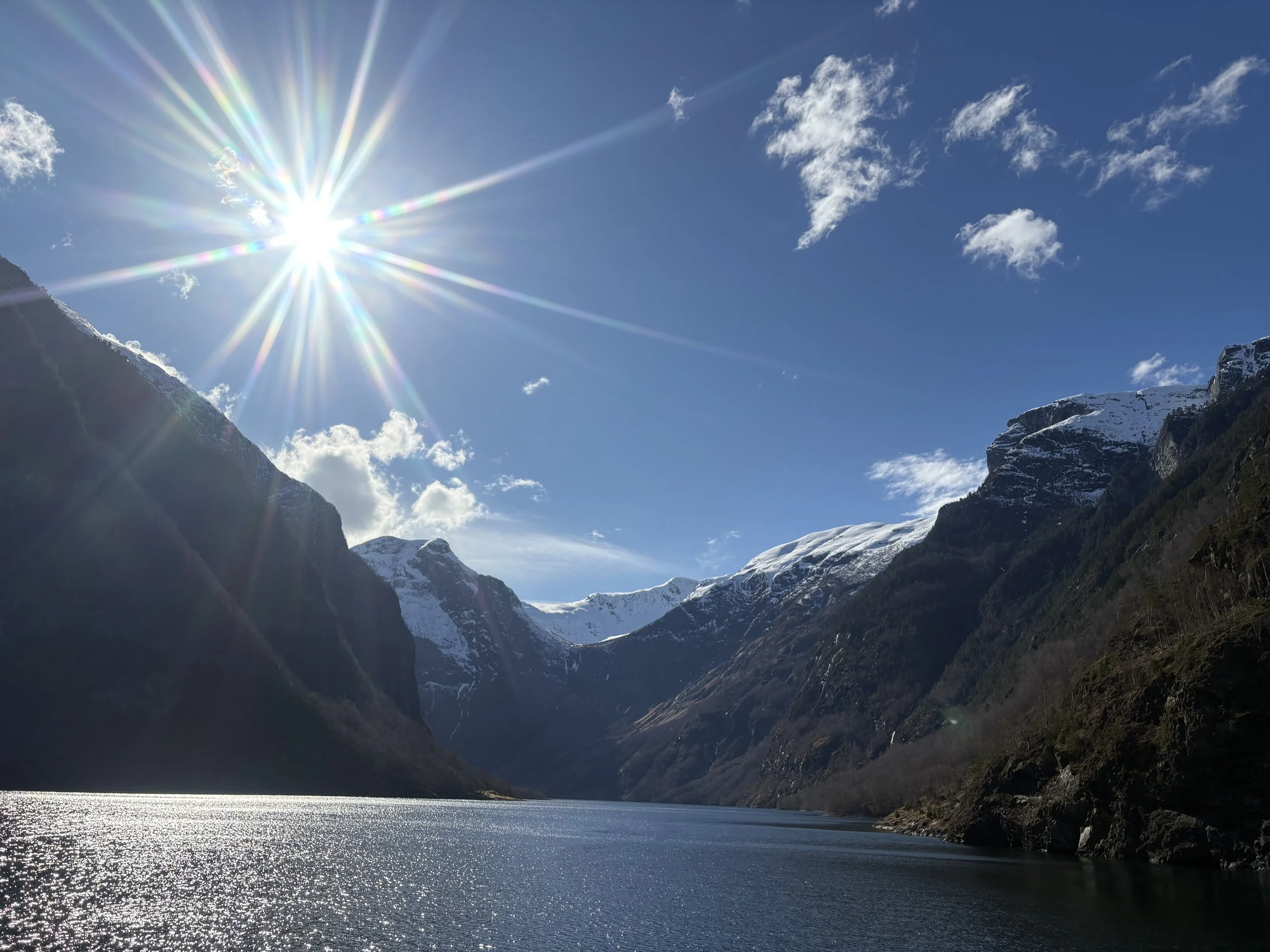
The Nærøyfjord, located in Vestland county in Western Norway. This UNESCO World Heritage Site is known for its dramatic, steep mountains, numerous waterfalls, and scenic, unspoiled nature.
The Wealth of Water
Norway makes this visible in the way it powers itself. It is one of the world’s major oil and gas producers, and yet its domestic electricity system is still built primarily around water. Hydropower accounts for roughly 88–89% of Norway’s normal annual electricity production, and government sources continue to describe hydropower as the backbone of the Norwegian power system. That contrast stayed with me: a country sitting on immense petroleum wealth, still choosing to draw so much of its everyday power from rivers, reservoirs, and falling water.
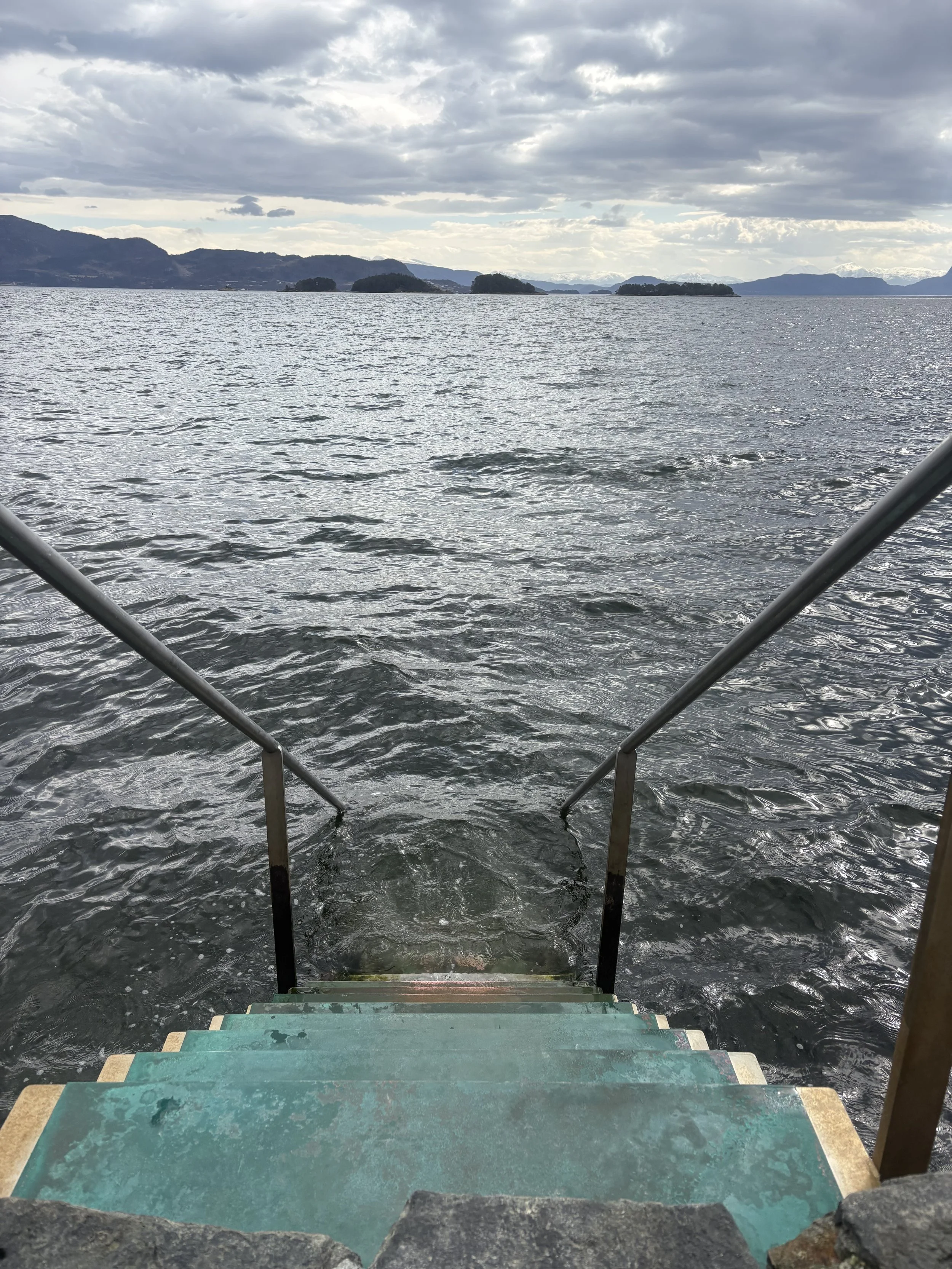
Entrance to the Bjornafjord where Solstrand guests may enjoy a plunge after warming themselves in the dry sauna.
I saw this same mindset reflected in smaller, tangible ways too. At Solstrand Hotel & Bad, the sustainability language was not just decorative branding. The hotel states that it heats 18,000 square meters with clean energy from Bjørnafjorden, using water intake by the fjord for its heat pumps. That means the fjord is not just scenery. It is part of the living system that supports warmth, comfort, and restoration. There was something so beautiful to me about sitting in spa waters while knowing the place was designed in relationship with the landscape around it, not in opposition to it. Even the wooden planks leading to the dock were artfully custom-crafted to fit around the large slabs of stone that jutted out into the water.
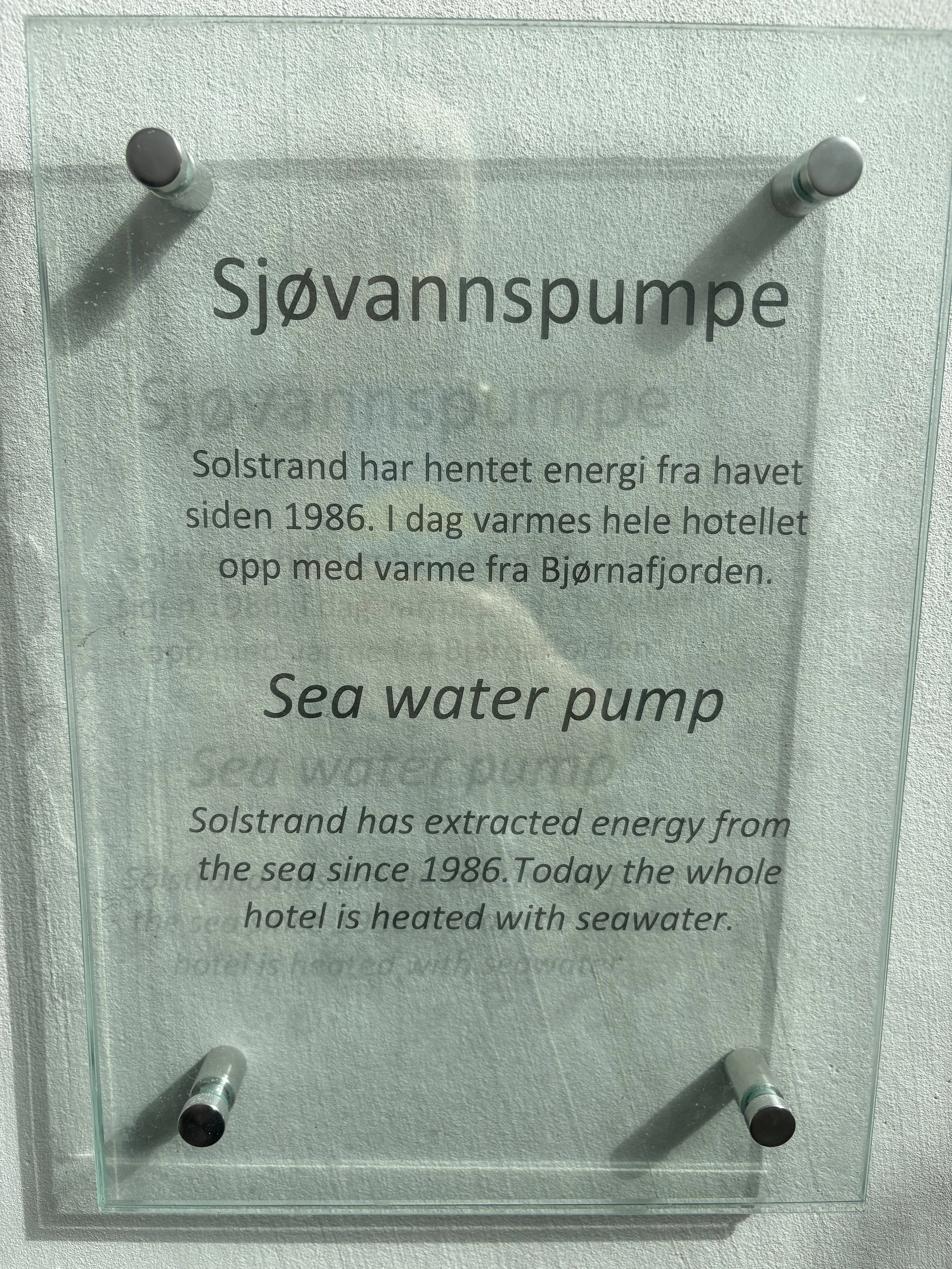
Established in 1896, this retreat remains aligned with their mission to incorporate longevity and sustainability into every detail of their facility.
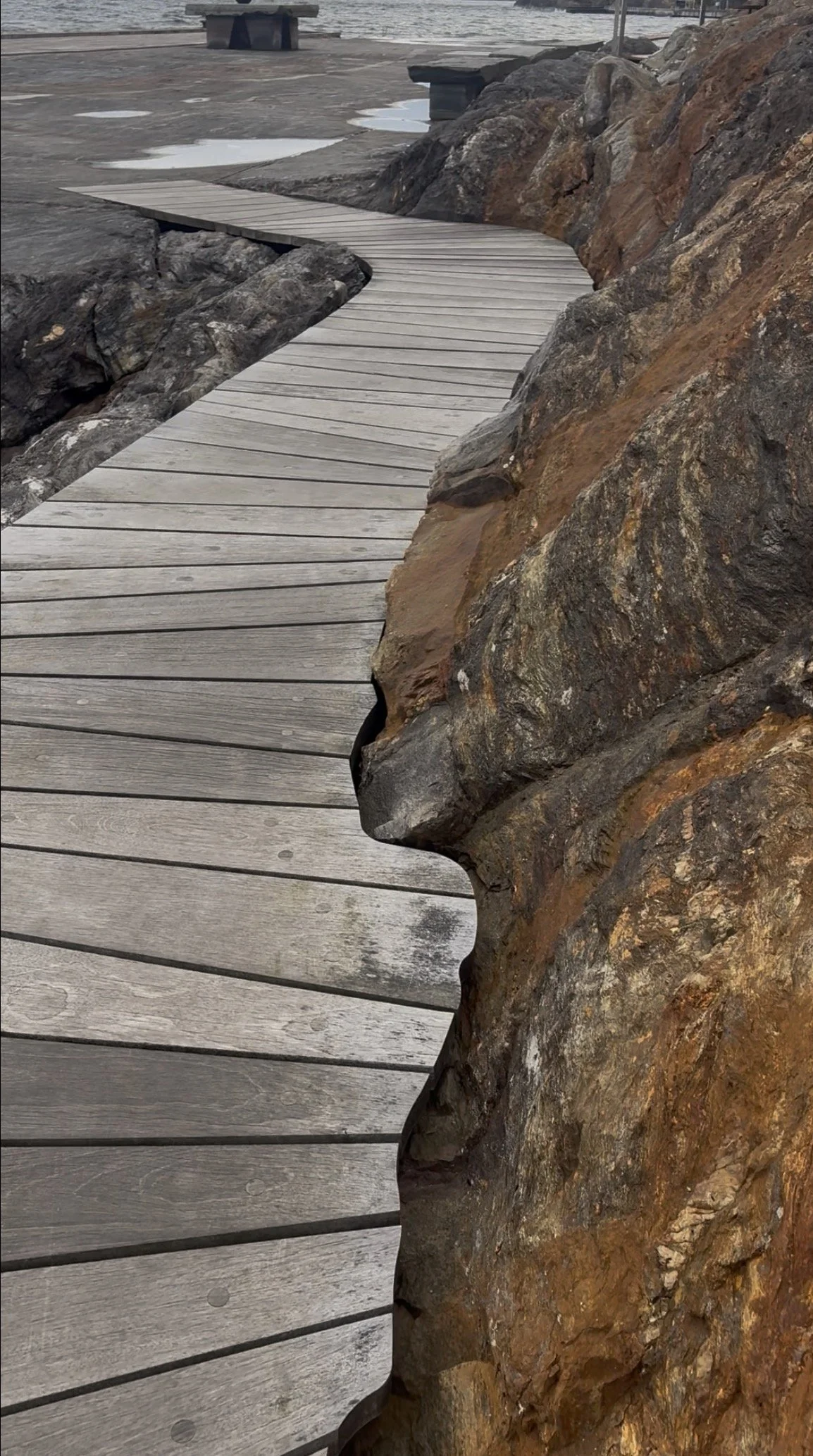
The intentional and artful details appreciatively reflected at the Solstrand Hotel & Bad (Bath/Spa) where nature and relaxation intersect with respect and harmony.
A Transition for Transportation
Transportation offered another powerful example. Norway’s electric vehicle transition did not happen because people were merely told to “do better.” It happened because the country aligned policy with desired behavior. “What’s that like?” you ask, America… For starters, Norwegian government and industry sources describe a long package of incentives: tax advantages for EVs, reduced tolls, lower ferry fares, charging rights for residents in apartment buildings, and broad charging infrastructure. By the end of 2025, more than 95% (let that number sink in) of new passenger cars sold in Norway were fully electric. That is what becomes possible when a society makes the healthier choice more practical, more affordable, and more normalized. The result is not just lower emissions. It is quieter streets, cleaner air, less engine noise, and a calmer sensory environment for everyone living there. Think Los Angeles but without all the noise and smog.
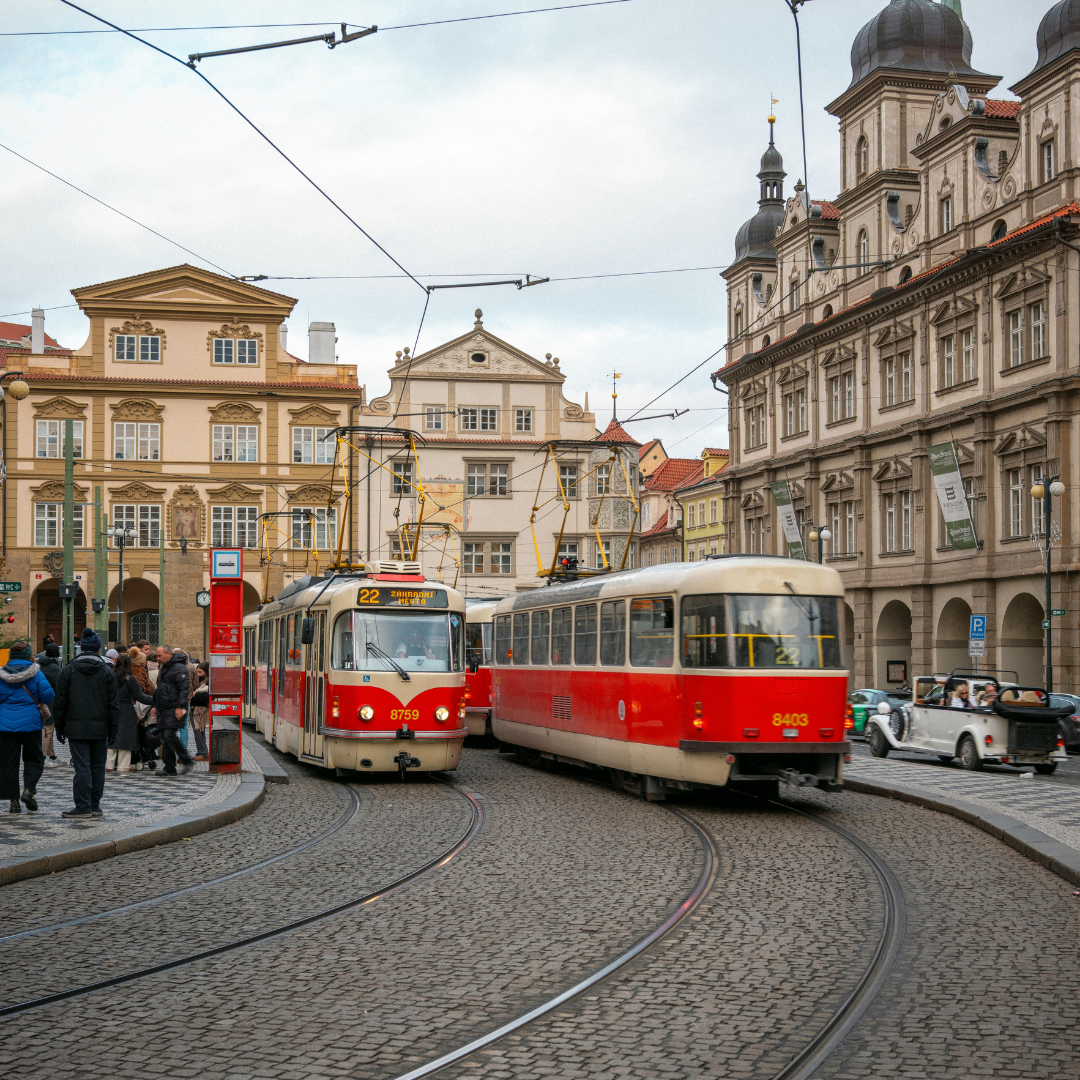
Public transit was easy, eco-friendly, and affordable - even for tourists like ourselves who were unfamiliar with routes and without a rental car.
Norway also uses restrictions thoughtfully. In Oslo, there are official mechanisms to temporarily prohibit diesel vehicles during periods of poor air quality, and the country has continued moving toward broader zero-emission transport goals. Here’s the thing this caveat made me realize: True stewardship does not only look like offering incentives; it is also about setting boundaries when public health and shared space require them. The message is simple: individual convenience does not get to endlessly outrank collective well-being. Too often in America, ideas like this are dismissed with oversimplified labels like “socialism” before people are invited to really look at the outcomes. But this is not about partisan ideology. It is about social stewardship - the kind that creates sustainability, resilience, and strength in a high-trust society, which we are moving further and further away from in our current and out-of-control capitalist consumerist model, where only the top 1% actually benefit from a health-striken and divided working class.
One Man’s Trash Is An Economic Treasure
Waste systems told the same story. In Oslo, households sort food waste, plastic packaging, and residual waste into different colored bags, while paper and cardboard are handled separately. The city then uses a massive optical sorting system to separate those streams; where the mixed stream moves along conveyors and optical sensors/cameras detect the color of each bag and sort it into the correct stream. In systems like these, the machine is not “understanding trash” the way a person would; it is recognizing a predefined visual signal, meaning the bag color is the sorting code. See how simple it is?
Once the bags are sorted, food waste is recovered and converted into biogas and biofertilizer rather than releasing that methane into an open-air landfill. This is done by collecting food scraps into sealed tanks where microorganisms break them down in the absence of oxygen. As they digest that organic material, they release biogas, which is rich in methane and can be captured and used as fuel for heat, electricity, or transport. What remains afterward is a nutrient-dense digestate that can be returned to the land as fertilizer. This kind of system would do more to truly support transportation, farmers, food resilience, and public health than policies that claim to protect our supply chain, like the dangerous executive order “Promoting the National Defense by Ensuring an Adequate Supply of Elemental Phosphorus and Glyphosate-Based Herbicides” which falsely claims to protect our food supply (at the expense of our health… and the likely benefit of insurance companies and large private equity healthcare groups which I will sound the alarm about in an upcoming post). For readers who care deeply about health, clean food, and the future of American families - including many who identify with what MAHA originally claimed to represent - I think this is worth a closer look.
Real health stewardship has to include the systems that shape our air, water, soil, food, and daily environment. This use of natural gas is so compelling because it turns “trash” back into material with purpose. Instead of treating waste as a dead endpoint, the system treats it as a resource stream. It is such a powerful reminder that what we call waste is often just misplaced resource.
And while Oslo is especially known for optical sorting, Norway also uses more advanced underground waste infrastructure in some places. Systems developed by Envac use underground pneumatic tubes to move waste from inlets to central collection points, where it is compacted and sealed. The benefits are practical and deeply human: fewer garbage trucks, less diesel traffic, less noise, less mess, cleaner streets, safer pedestrian areas, and more efficient collection. Think Manhattan without all the trash and parking confusion on trash collection days. Again, stewardship of land and stewardship of people reveal themselves as one and the same. Clean infrastructure is a public health intervention, a quality-of-life intervention, and an ecological intervention all at once.
Bottle Up Some of That CAN-do Attitude for Americans
One of the most impressive things Norway has done is make recycling easy, visible, and worth participating in. Its bottle-and-can deposit system is extraordinary. Infinitum, which runs the system, reported that in 2024 more than 1.5 billion cans and bottles were returned. Its reported deposit return rate was about 93%, and its total collection rate was about 98%. (Seriously, people… 98%. ) Compare that with the United States, where EPA data show PET bottles and jars had a recycling rate of 29.1% in the most recent national dataset EPA publishes. (WHYYYYYYYY, America?!) Those are not perfectly identical measurements, but the contrast is still stunning. Norway has built a culture and a system in which returning containers is normal, convenient, and materially rewarded. That is what policy can do when it respects both human behavior and material reality.
What is equally important is that Norway has worked to keep more of that loop closer to home. Researching this further, I found that Infinitum has explicitly described a goal of reusing more recovered plastic and aluminum in Norwegian beverage containers, rather than allowing the material to be downcycled into unrelated products elsewhere. In 2021, a new plastic bottle recycling plant opened in Norway to recycle soft-drink bottles domestically. That matters because localizing the loop reduces transport burden, improves traceability, preserves material value, and strengthens circular infrastructure inside the country itself.
Taking this observation one step further, on the topic of reducing plastic use, one of the simplest but most telling details I noticed throughout Norway was the cutlery. Again and again, in places where Americans would expect plastic forks, spoons, knives, and straws, there were wooden alternatives instead. That may sound minor, but material choices reveal values. Wood comes from a biological source rather than a fossil-fuel stream, and in Norway, that use exists within a broader forestry culture that expects renewal: forest owners are required to promote regrowth after harvest, either by planting or by supporting natural regeneration. Apparently, necessary regeneration measures must be initiated within three years after felling.
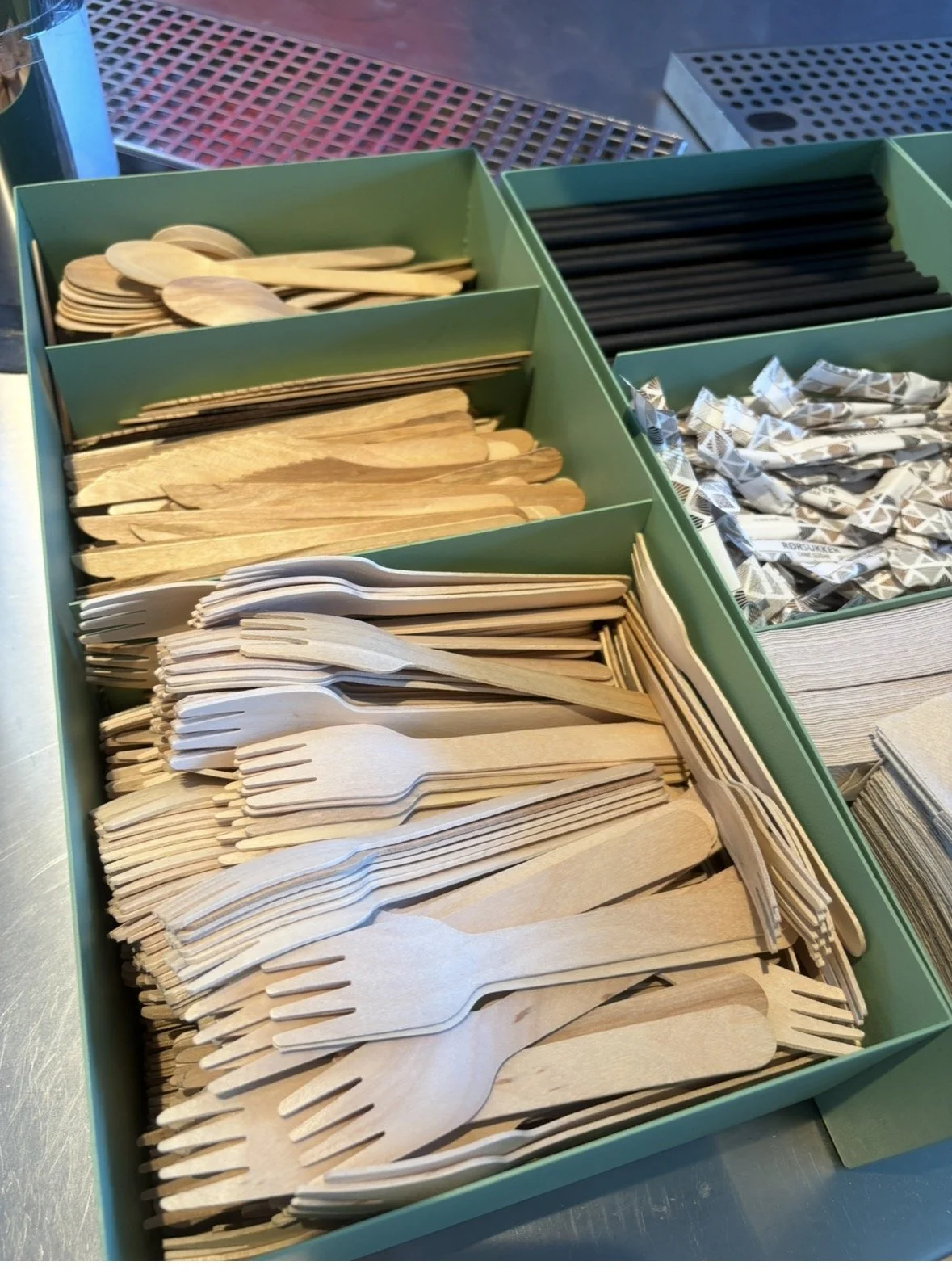
Yes, I had to take a picture of this. Somehow, the concept of renewable and compostable utensils is an impactful memory I couldn’t stand to leave behind.
In other words, even ordinary takeout utensils seem to sit inside a larger ethic of use and system of replenishment. Maybe that is part of why the wharfs and fjord edges felt so dramatically striking to me. I did not see the plastic clutter that has become so common on American beaches and shorelines. That absence did not feel accidental. It felt like the visible result of a society that has chosen, in many small and large ways, to reduce plastic upstream before it has the chance to become litter, microplastic, or marine pollution.
Financial and Ecological Sustainability as One
The financial logic underneath all of this is also worth noticing. Norway repeatedly structures its systems so that the more ecologically sound choice is also the more economically sensible one. Return your bottles and get your deposit back. Choose lower-emission transport and pay less in certain contexts. Municipal waste systems can be designed around actual service costs rather than unchecked profit extraction. These are not just environmental ideals; they are operational incentives. They shape habits.
And habits, over time, shape culture.
As a cognitive behavioral life coach, I spend a great deal of time helping clients reconsider inherited habits, question old frameworks, and gently restructure patterns that no longer serve their health, relationships, or sense of possibility. That is part of why this experience felt so validating to me. It reaffirmed something I have seen over and over again at the individual level: just because a way of living has become familiar does not mean it is healthy, wise, or inevitable. As an American citizen, I feel acutely the symptoms of a society many of us have been taught to simply endure - chronic stress, disconnection, overstimulation, waste, and systems that too often work against human flourishing rather than for it. As a life coach and healthcare provider, I could not help but see how deeply this translates across both the micro and the macro: the same truth applies to a person, a family, a community, and a nation. When we become willing to examine our defaults, we create a space and a possibility for healing.
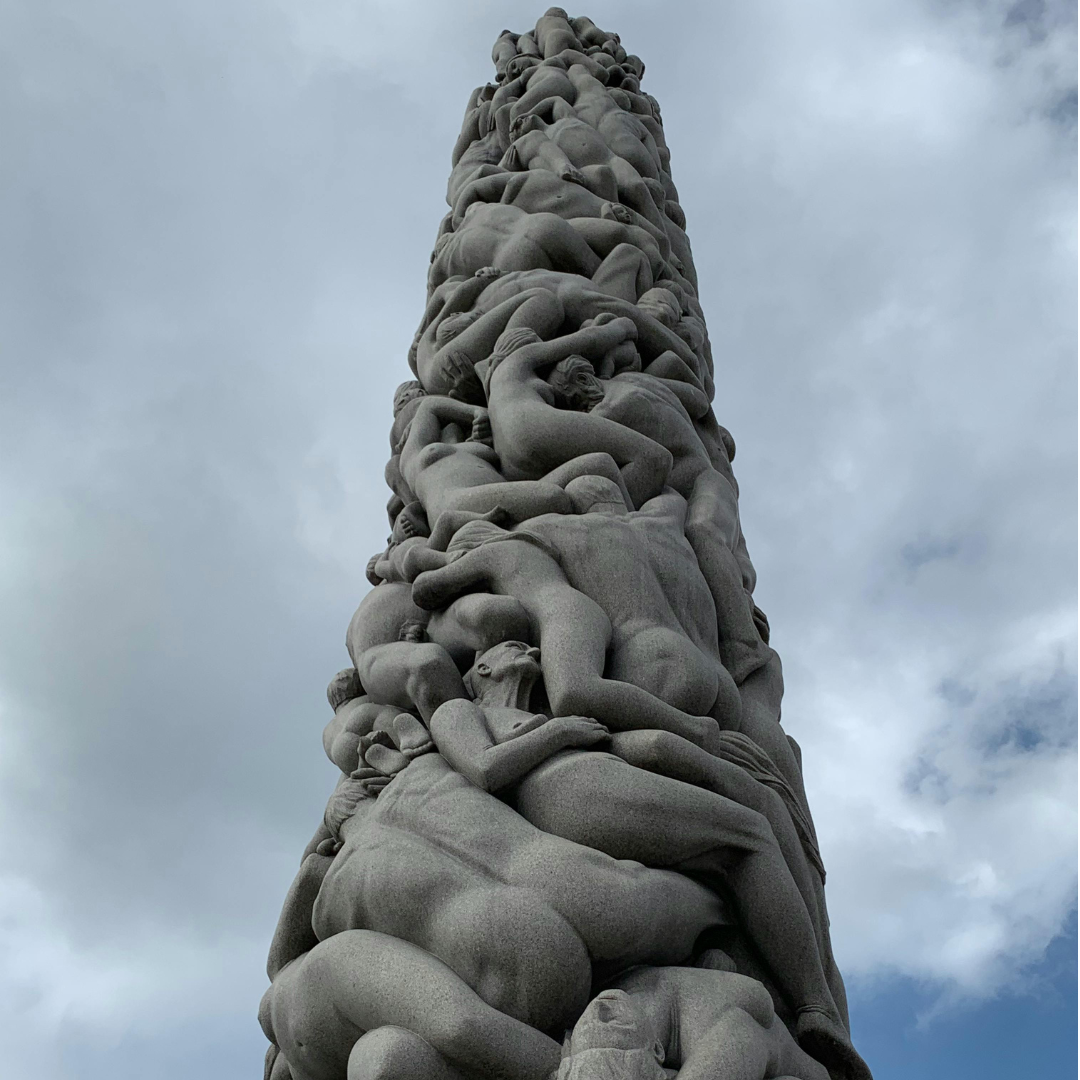
‘The Monolith’, one of the many masterpieces by Gustav Vigeland in Oslo’s Vigeland Park, represents to many the human longing for spirituality and resurrection. I personally felt it symbolized the choice humans make to lift each other up or shove each other down.
Final Thoughts
As an American, this experience left me with both admiration and grief. Admiration for what is possible when a society decides that public systems should support life. Grief because so much of American capitalism now feels organized around the opposite impulse: extract more, sell more, package more, stimulate more, discard more. We are burning through land, poisoning waterways, normalizing endocrine-disrupting plastics, overstimulating our children, fragmenting our attention, and weakening the relational fabric that healthy communities require. We have been conditioned to accept noise, waste, ugliness, disposability, and chronic stress as the unavoidable price of modern life. We’ve been conditioned to accept a LIE.
Traveling has reminded me that “normal” is often just an inherited habit. It is not always wisdom. Just because we have done something for a long time does not mean it is the right way, the best way, or the only way. Sometimes another culture can reveal what we have stopped questioning. Sometimes, experiencing a discrepancy between a place where systems are built with more foresight, more restraint, and more reciprocity than our own can wake us up to what we have been tolerating.

“The Wheel of Life”, a Vigeland sculpture representing the interconnectedness of human existence from birth to departure.
That is one of the greatest gifts of leaving home: perspective. If we are willing to be open-minded, we can learn from people we respect. We can borrow ideas. We can adapt them. We can ask better questions. We can stop assuming that convenience must trump coherence, or that profit must trump wellness, or that humans and our physical and mental health are somehow separate from the conditions of the land beneath them.
What I saw in Norway was not perfection. But it was a culture that, in many visible ways, still seems to remember that the people and the place belong to each other. It’s a reminder that we have much to learn, a long way to travel - and it’s entirely worth our while. I hope you will agree.