Is it as SIMPLE as Stress?: The Emotional Side of Skin Picking & Hair Pulling
Understanding the Affective domain of ComB, and why the emotions behind body-focused repetitive behaviors aren't always what we expect.
You finally have a moment to yourself.
The workday is over. You're curled up on the couch, watching something familiar, scrolling through your phone, or simply enjoying a little peace and quiet.
And then you notice it…
Your fingers are searching your scalp. You're rubbing a spot on your face. Maybe you've already pulled a few hairs or picked at an area of skin before realizing what you're doing.
But here's the thing:
You weren't even stressed this time.
Or were you?
We tend to associate skin picking and hair pulling with anxiety. And while anxiety can certainly play a role, the emotional landscape of body-focused repetitive behaviors (BFRBs) is considerably more complicated.
Sometimes we pick when we're overwhelmed. Sometimes when we're frustrated, lonely, or exhausted. But sometimes we pick when we're bored, excited, deeply focused, or finally relaxing after a demanding day.
What if the behavior isn't always about escaping an uncomfortable emotion?
What if, sometimes, it's about trying to feel something… different?
This is where the Affective domain of the Comprehensive Behavioral (ComB) model becomes particularly interesting. This is also where understanding it may change the way you think about your own behavior. I know it did for me.
A Quick Look Back: Understanding the SCAMP Framework
If you've been following this series, we've been exploring the five domains that help explain why skin picking, hair pulling, and other BFRBs occur.
Together, these domains form the acronym SCAMP: Sensory, Cognitive, Affective, Motor, and Place.
In our Sensory domain article, we explored how physical sensations and visual irregularities can initiate or reinforce repetitive behaviors. An itchy scalp, a rough patch of skin, or a coarse hair may create an urge to touch, manipulate, or remove something.
In our Cognitive domain article, "Just One More," we examined the thoughts and beliefs that can intensify these urges. Statements like "I can't leave this bump alone" or "I'll stop once everything feels smooth" can transform an ordinary sensation into something that feels urgently necessary to correct.
But what about the emotions accompanying those thoughts and sensations?
That's where our third domain, Affective, enters the picture.
The remaining two domains, Motor and Place, explore how habitual movements, body positions, physical surroundings, and environmental cues can make these behaviors more likely.
Most importantly, we realize that these domains rarely operate independently. Think of them as volume dials, with different contributors becoming more or less influential depending on the situation.
Today, we're turning our attention toward the emotional dial.
What Does "Affective" Actually Mean?
In behavioral psychology, affect refers broadly to our emotional experiences and feeling states. Within the ComB framework, the Affective domain considers how emotions, moods, and related states of internal activation may influence picking or pulling, as well as how the behavior changes those experiences.
Anxiety is one possibility, but it's far from the only one.
Consider the emotional experiences that may accompany a BFRB:
High activation: Anxiety, frustration, anger, excitement, impatience, tension, or feeling overwhelmed.
Low activation: Boredom, emotional flatness, understimulation, or feeling disconnected.
Vulnerability states: Loneliness, sadness, disappointment, embarrassment, or emotional exhaustion.
Positive emotional states: Happiness, anticipation, excitement, or the pleasure of finally unwinding.
Fatigue, hunger, and physical restlessness may also influence these patterns, although they aren't emotions themselves. They are physical drivers that closely associate with our emotional dials. If you’ve ever heard someone say they’re “hangry” you know exactly what they’re talking about.
Here's what makes this domain particularly significant: Two people may engage in the same behavior because it provides entirely different emotional experiences.
For one person, pulling a hair may temporarily reduce mounting tension.
For another, the sensation of searching for and extracting a particular hair may be stimulating or satisfying during an otherwise monotonous activity.
For someone else, picking might provide a momentary distraction from sadness or an uncomfortable conversation.
The behavior looks similar from the outside, but its function is different. The key is understanding the function. When we can understand the function, we can begin choosing a response that actually addresses the need.
A Lesson I Had to Learn in My Own Practice
I have spent more than 16 years practicing dermatology. For much of that time, when patients came to me struggling with skin picking or hair pulling, I associated their behaviors primarily with stress.
I knew that what was happening on the surface of their skin was often only part of the story. So rather than focusing exclusively on treating the visible consequences, I tried to address what I believed was happening beneath them.
I talked with patients about stress management, recommended lifestyle modifications, encouraged movement and breathwork, and sometimes discussed herbal supplements or prescription medications when clinically appropriate.
And I genuinely believed I was approaching their care comprehensively.
After all, dermatology doesn't always make room for conversations about emotional health. I wanted my patients to feel seen beyond their skin. The feedback was great, and I was able to help alot of people and make lasting impacts on their lifestyle and self-care and deepen provider-patient relationships within the context of more holistic and customized care. I honestly thought I was really going above and beyond addressing my patients’ needs.
But as I began exploring additional resources to better support them, I became more familiar with the Comprehensive Behavioral model, and something BIG happened.
I realized that while I was looking beyond the skin, I was still looking through a fairly narrow lens.
I had been treating stress as the primary emotional contributor and endpoint without fully appreciating how much more the Affective domain encompasses… What about the patient who pulled their hair when they were bored, not anxious? Or the person who picked while watching television because the behavior provided stimulation rather than relief? What about the patient who engaged in these behaviors during moments of excitement, emotional exhaustion, or simply transitioning from a busy day into a quieter evening?
Reducing and minimizing all of those experiences down to stress, even with the best intentions, meant I was missing what the behavior was actually accomplishing for that individual. More importantly (and to my horror), I was focusing on helping patients manage what I assumed they were feeling, rather than first understanding what they were experiencing.
This wasn't a realization that stress management was unimportant. Those strategies can be valuable, and for some patients they may remain an important part of care. But reducing stress doesn't necessarily address a behavior that serves a different emotional or sensory function.
Learning more about ComB didn't replace my appreciation for the connection between emotional well-being and skin health. It only deepened it. It reminded me that truly individualized care requires more than looking beneath the surface. It requires being willing to question our assumptions about what we'll find in there. It’s not always what we think. This is why, sometimes, the most meaningful shift in our approach begins not with a new treatment, but with a better question.
The Emotional Paradox: Why Something That Hurts Can Also Feel Relieving
That change in perspective also helped me understand something that can seem contradictory about these behaviors: the very action that causes distress afterward may provide something desirable in the moment.
People often ask, "If picking damages your skin, or pulling creates noticeable hair loss, why would you keep doing it?"
It's a reasonable question, but it assumes that our behavior is always guided by long-term consequences. In reality, immediate consequences can be extraordinarily influential.
… Consider someone experiencing mounting frustration after a difficult conversation. Their shoulders tighten. Their thoughts begin racing. Without consciously deciding to, their fingers begin searching for a particular hair.
They find it. They pull it.
For a moment, something changes.
Maybe the tension eases. Maybe their attention narrows. Maybe the physical sensation briefly interrupts the emotional discomfort. That immediate shift can reinforce the behavior, even if the person later regrets pulling.
In behavioral psychology, when an action becomes more likely because it removes or reduces something unpleasant, we call that negative reinforcement.
But what if the person was bored rather than upset?
In that case, picking or pulling may introduce stimulation, sensory interest, or a satisfying experience into an otherwise uneventful moment. When a behavior becomes more likely because it provides something rewarding, we call that positive reinforcement.
Neither term refers to whether the behavior is morally good or bad. They describe how its immediate consequences may influence the likelihood of repetition.
And both processes can occur within the same container.
This helps explain why simply telling someone to relax, manage their stress, or keep their hands busy may not be sufficient.
The lesson I’ve learned: You can't reliably replace a behavior without understanding what that behavior is doing for the person.
How Do You Know Whether Your BFRB Has an Emotional Component?
One of the challenges with the Affective domain is that emotions aren't always obvious. We often expect emotions to arrive with recognizable labels: I'm anxious. I'm angry. I'm sad. The reality is, emotional experiences can be subtle, mixed, or difficult to identify, particularly when we're distracted, exhausted, or moving through a familiar routine. Often, they’re fluidly changing. Labeling an emotion can feel like trying to hold water in your hands.
Sometimes the first thing we notice isn't an emotion at all. Many therapists and life coaches direct their clients to recognize physical sensations in the body to help them pull the string that leads to the emotion. We might sense a tightening in the chest, restlessness in our hands, an inability to settle, or a sense that something feels uncomfortable without knowing why.
Other times, the behavior itself is the symptom which alerts us to a change in our emotional state.
Rather than asking only, "Was I stressed?", it can be more informative to consider three moments:
1) Before: What Was Happening Inside Me?
Think about the period just before picking or pulling began.
Were you feeling rushed, frustrated, or overwhelmed? Had you been sitting quietly for a long time? Were you recovering from an emotionally demanding day?
Maybe you weren't feeling much of anything at all.
It's worth noticing not only what emotion was present, but how activated or understimulated you felt.
2) During: What Was the Behavior Doing for Me?
Did picking help you feel calmer or more focused?
Did pulling provide stimulation, satisfaction, or a sense of release?
Did you become absorbed in the activity, temporarily losing awareness of time or your surroundings?
The important distinction is that we aren't assuming the behavior provided emotional relief. We're looking for evidence of what actually changed.
3) After: What Changed, and for How Long?
Did you experience relief, satisfaction, distraction, or increased alertness?
How long did that feeling last?
Did frustration, shame, or disappointment appear afterward?
The emotional experience following an episode matters, too. Sometimes distress about the consequences of picking or pulling becomes another source of discomfort, potentially contributing to future episodes.
And sometimes a person can't identify any significant emotional change at all. That information matters just as much. Not every BFRB episode is emotionally driven.
The purpose isn't to prove an emotional explanation. It's to understand whether one exists and how much influence it has.
When the Behavior Becomes an Emotional Shortcut
Our nervous systems constantly respond to changes in our internal and external environments. We shift our attention, move our bodies, seek stimulation, withdraw from uncomfortable situations, and engage in familiar activities to help regulate how we feel.
Many of these responses occur with little conscious thought. Thought and behavior typically follow emotion. Emotions are raw. We can’t TRULY control the energy coming into our system that gets translated to raw emotion. We CAN control how we translate them into our psyche, how we ascribe meaning, and how we choose to react to that ascribed meaning in thought and behavior. And after a while, diverting different energies through the same chosen categorized paths time after time creates deeper and more automatic pathways. For some people, picking or pulling becomes one of those learned responses. Over time, the brain may begin associating certain emotional states with a familiar action and its immediate consequences. Frustration fluently becomes a cue to pull without much thought in between. Boredom blindly becomes an opportunity to pick. Emotional exhaustion makes an automatic behavior more likely to unfold without interruption.
This doesn't have to mean the person has a generalized inability to regulate emotions. Nor does it imply that every BFRB has a hidden psychological cause.
It means that, in certain circumstances, a repetitive behavior may have become a familiar way of changing an internal experience.
That distinction is important because the goal of treatment isn't to eliminate anxiety, boredom, sadness, or frustration.
Those are normal parts of being human.
The goal is to build flexibility in how we respond to them.
What Do We Do About It? Using ComB and CBT-Informed Strategies
Once we recognize that an emotional state may influence a behavior, we can begin exploring alternatives. ComB uses an individualized assessment of the circumstances before, during, and after a BFRB episode to select interventions that fit the person's specific pattern.
Cognitive Behavioral Therapy (CBT), Habit Reversal Training (HRT), and acceptance-based approaches can contribute useful strategies. But the most important principle is that different emotional needs call for different responses.
When the Nervous System Feels Overwhelmed
If picking or pulling tends to occur during tension, frustration, or emotional overload, we may begin by recognizing the early physiological signs of rising activation. Perhaps your jaw tightens, your breathing becomes shallow, or your thoughts begin racing. These signals offer opportunities to respond before the behavior becomes more automatic.
Movement, grounding exercises, mindful breathing, and intentional breaks can help us navigate these states. When the behavior has become habitual, these strategies can also be paired with a competing response learned through HRT to interrupt the familiar movement.
For some individuals, it may also be helpful to consider a broader approach to supporting emotional and physiological regulation. This is an area where my history in dermatology, behavioral health, and integrative wellness increasingly intersect. When persistent stress or heightened physiological arousal is a significant contributor, complementary approaches may deserve consideration alongside evidence-based behavioral treatment.
For example, noninvasive vagus nerve stimulation is an emerging area of neuromodulation research. Transcutaneous vagus nerve stimulation is being investigated for its potential effects on autonomic activity, anxiety symptoms, and emotional regulation. Early findings are encouraging in certain clinical settings, although protocols and study populations vary considerably. These devices have not been established as treatments for BFRBs, and findings from clinical studies cannot automatically be applied to every consumer device. For readers interested increasing scientific studies and literature in this area, products such as VaguStim provide an opportunity to explore the concept of noninvasive vagus nerve stimulation. (*When comparing at-home V Stim devices, always make sure you’re looking specifically at transcutaneous auricular devices which attach to the tragus and concha of the ear where the superficial branch of the vagus nerve travels. These are the devices the non-implant clinical studies are based on.)
Certain botanical preparations have also been investigated for their potential effects on tension and anxiety. These include milky oats, skullcap, hawthorne (great for supporting emotionally broken or wounded hearts), linden (also great to support emotional relaxation), passionflower, and other botanicals traditionally used to support relaxation, although the quality and consistency of clinical evidence vary substantially. Herbal preparations are not interchangeable, and natural does not necessarily mean risk-free. Ingredients, concentrations, medication interactions, medical conditions, and potential adverse effects all matter and should be discussed with your healthcare clinician prior to initiating.
I see value in considering these approaches when appropriate, but I don't view them as replacements for understanding and addressing the BFRB itself. They are helpful resources and tools for complementary supportive application.
For someone whose picking or pulling is consistently associated with heightened stress, a thoughtfully selected combination of behavioral strategies, movement, breathwork, sleep support, and appropriately evaluated complementary therapies may be worth exploring. Nonetheless, supporting the nervous system and retraining a learned behavioral response are related goals, but they are not the same intervention.
A complementary strategy might help someone manage aspects of stress while behavioral treatment addresses the specific cues and reinforcement patterns that maintain picking or pulling. The aim isn't to sedate the nervous system, eliminate every uncomfortable emotion, or promise a complete reset. It's to support greater flexibility, both physiologically and behaviorally, with strategies selected according to the individual rather than a universal protocol.
When You're Bored or Understimulated
This is where advice to "just relax" or actively manage stress can miss the point entirely. If picking or pulling is supplying stimulation, making yourself sit quietly and do nothing may actually leave the underlying need unaddressed. A better response might involve standing up, changing activities, engaging with something mentally interesting, learning about something that made you want to know more, or finding a safe sensory or motor activity that provides an engaging alternative.
For someone who picks while watching television, a suitable hands-on activity like knitting, painting, or using adult coloring books for recreational or even educational purposes may be more useful than another relaxation exercise.
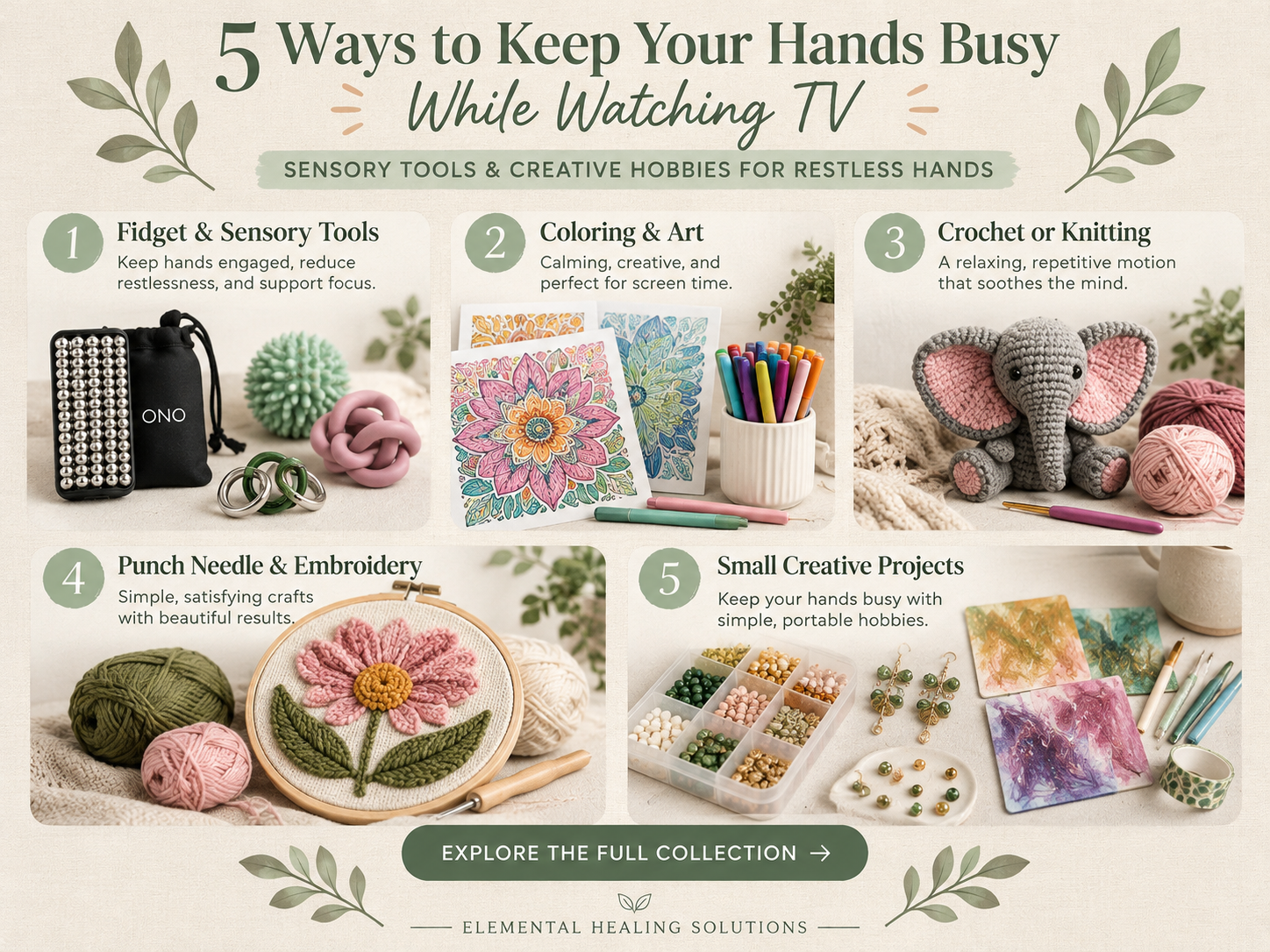
The aim is to understand what kind of stimulation is helpful without reproducing the damaging aspects of the original behavior.
When You're Sad, Lonely, or Emotionally Depleted
Sometimes the behavior appears during moments when a person needs comfort, connection, or rest. In these situations, behavioral work may include identifying what has been missing or emotionally demanding throughout the day. Perhaps an exhausting afternoon calls for rest. Maybe loneliness calls for a connection. A difficult experience may need acknowledgment rather than distraction.
This is where CBT-informed approaches can help someone recognize patterns, examine interpretations that intensify distress, and develop alternative coping responses. Rather than simply substituting another activity, we're considering the emotional context that made the original behavior more likely.
When the Urge Is Present but the Emotion Won't Go Away
Not every uncomfortable emotion can be resolved immediately. Attempting to eliminate every difficult feeling may inadvertently create another struggle. After all, we need to feel it to heal it. Acceptance-based strategies offer a different possibility: learning to experience an emotion or urge without automatically acting on it.
This might involve noticing the discomfort, naming it if possible, observing changes in its intensity, and allowing it to be present while choosing a response consistent with your goals. You can even take it a further step and talk to it as if it were a presence in the same room. This helps you to become an active observer of the emotion and creates distance without denying it’s presence. However you manage to observe it and navigate your response, the emphasis isn't on suppressing emotions or pretending the urge isn't there. Instead, it’s on developing the capacity to respond without needing to eliminate the feeling first.
You can feel uncomfortable without having to fix the feeling with your fingers.
That may be one of the most meaningful forms of flexibility we can develop.
When Emotions and Habits Overlap
Imagine someone who frequently picks their skin while winding down in the evening. At first glance, it seems like a straightforward emotional pattern. They're finally relaxing after a long day. But a closer look reveals several things happening at once…
They are mentally exhausted and understimulated (Affective). They notice a rough area of skin (Sensory). A thought appears: "I'll just smooth this out" (Cognitive). Their fingertips begin scanning automatically (Motor). They're sitting in the same chair where they often pick while watching television (Place).
All five SCAMP domains are present.
A plan focused exclusively on managing anxiety might accomplish very little here. Rather, effective ComB-informed work might involve creating a more engaging evening routine, addressing the skin texture appropriately with a skincare consult, changing the habitual hand movement, and modifying the environment to make picking less automatic.
One intervention may help. Several complementary changes may work better.
The purpose of SCAMP isn't to put you into a category.
It's to help us understand the combination of circumstances that makes a particular behavior more likely, so we can build a more individualized response.
What Does the Research Tell Us?
Research supports the importance of examining emotional regulation in body-focused repetitive behaviors, although the relationship is neither simple nor universal. A 2025 systematic review of 19 studies on skin-picking disorder found that individuals with the disorder generally reported greater difficulties with emotion regulation than healthy controls. The relationship between emotional dysregulation and overall picking severity was less consistent.
Interestingly, emotional regulation difficulties appeared more closely associated with focused picking, which tends to involve greater awareness and intentional engagement, than with automatic picking, which may happen outside immediate awareness while dissociated. That’s an important distinction. Emotional processes may be especially relevant for some patterns of picking without explaining every episode. These findings support a thoughtful, individualized approach rather than a universal explanation or a one-size-fits-all intervention. The research doesn't tell us that every person who picks or pulls has an emotional regulation problem. It suggests that emotional processes are worth examining, especially when the behavior appears to change how someone feels.
Maybe the Question Isn't "Why Can't I Stop?"
If you've struggled with picking or pulling, you may have spent considerable time wondering why you continue doing something that causes frustration, physical consequences, or distress. But focusing exclusively on stopping the behavior can overlook what happens in the moments leading up to it.
Perhaps there is tension that needs another outlet. Boredom that needs engagement. Sadness that needs acknowledgment. Or an urge that can be experienced without being acted upon. Sometimes the response will be emotional. Sometimes sensory, cognitive, habitual, or environmental. Often, some combination deserves attention.
For me, learning to look at these behaviors through the ComB framework has been a reminder that even thoughtful, compassionate care can become more effective when we're willing to reconsider our assumptions. I used to think that helping someone manage stress was addressing the emotional side of their BFRB. Now I recognize that understanding the Affective domain means asking much more.
Not simply, "How do we make this person feel less stressed?" but "What is this person experiencing, what is the behavior doing for them, and what other response might meet that need?"
Understanding these patterns doesn't instantly eliminate a BFRB. But it can make the behavior less mysterious and open up more effective ways to respond. The next time you notice your fingers wandering toward your skin or hair, consider a different question:
"What am I feeling right now, and what might I be hoping this behavior will change in this moment?"
You may not always have an answer. That's fine. We don’t need perfect emotional awareness or perfect behavioral control. But we can always achieve personal growth by developing more opportunities to notice, understand, and respond with intention.
Because emotions aren't the enemy. They’re energy in motion and they’re trying to go somewhere. They just need you to help facilitate their flow while understanding your own enough to make a different choice.
Next…
In the next article, we'll explore the Motor domain: how familiar hand movements, body positions, and automatic habits can keep picking and pulling going, sometimes before we're even aware the behavior has started.
Working With Elemental Healing Solutions
At Elemental Healing Solutions, we recognize that skin picking and hair pulling are rarely explained by a single trigger or a simple lack of willpower.Our BFRB-focused coaching and education draw from the Comprehensive Behavioral (ComB) model, Habit Reversal Training, and CBT-informed behavioral principles to help individuals better understand their patterns and practice personalized strategies.Together, we explore how sensations, thoughts, emotions, habits, and environments interact, with an emphasis on compassionate awareness and practical, sustainable change.Coaching does not replace psychotherapy, psychiatric treatment, or medical care. When BFRBs cause significant distress, impairment, bleeding, infection, scarring, or hair loss, evaluation by qualified medical and mental-health professionals familiar with BFRBs is important.Interested in understanding your own patterns? Visit Elemental Healing Solutions to learn more about individualized BFRB-focused coaching and education.References and Further Reading
Carlson EJ, et al. Comprehensive Behavioral (ComB) Treatment of Trichotillomania: A Randomized Clinical Trial. Behavior Therapy. 2021;52(6):1543–1557. https://doi.org/10.1016/j.beth.2021.05.007
Barber KE, Fitzgerald JM. Emotion regulation deficits in skin picking (excoriation) disorder: A systematic review. Journal of Affective Disorders. 2025;388:119500. https://doi.org/10.1016/j.jad.2025.119500
International OCD Foundation. Comprehensive Behavioral (ComB) Treatment for Skin Picking and Hair Pulling Disorders.
International OCD Foundation. Evidence-Based Therapeutic Treatment for BFRBs.
National Center for Complementary and Integrative Health. Anxiety and Complementary Health Approaches.
Liu J, et al. Transcutaneous auricular vagus nerve stimulation for anxiety symptoms across fear, trauma, and disease contexts: a narrative review of clinical evidence and mechanisms. European Archives of Psychiatry and Clinical Neuroscience. Published online October 14, 2026. https://doi.org/10.1007/s00406-026-02399-4